

Concrete Admixture
Concrete Admixture Manufacturer
Zibo Zhuoxing Enterprises Co., Ltd was established in 2008 and has been exporting TPEG, HPEG, EPEG, 50% polycarboxylate water reducer liquid and polycarboxylate water reducer powder to many countries since 2015.
Strong Production Ability
The company currently has a full set of production lines from HPEG to PCE high-efficiency water reducers. The annual production capacity is 80,000 tons and the output is 72,000 tons. The total annual PCE production capacity is 100,000.00 tons.
Quality Control
The company has passed ISO9001 quality management system certification. We conduct raw material inspection upon entry to ensure qualification for production, effectively control the whole production process to meet requirements, and sample test each batch before delivery.
Professional Team
The company is privileged to have a professional export team. Our R & D team, which consists of a group of highly qualified and experienced experts, maintains close and fruitful communication with renowned scientific research institutes consistently.
Rich Experience
As one of the two earliest manufacturers of TPEG/HPEG in China, after 16 years of continuous research, we have solved many professional needs of domestic and foreign customers in the field of PCE high-efficiency water reducers.
Concrete admixtures are natural or manufactured chemicals or additives added during concrete mixing to enhance specific properties of the fresh or hardened concrete, such as workability, durability, or early and final strength.
-
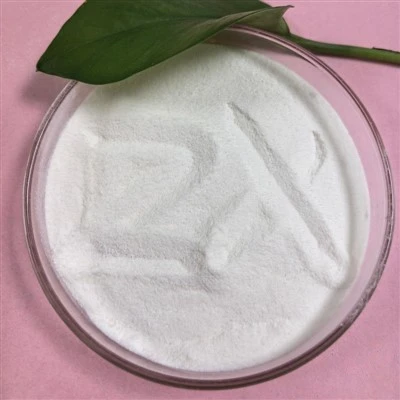 SPS-19 PCE Powder Early-Strength Water-Reducing High Perf...SPS-19 is a new-generation, environmentally friendly, high-performance PCE powder characterized by early strength, high water-reducing and full water solubility.Add to Inquiry
 -
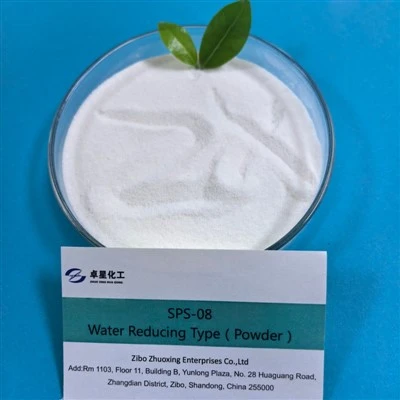 SPS-08 China Direct Factory Cost Efficient Concrete Mixtu...SPS-08 is a high performance PCE powder with high water reducing rate, having a good thermal stability and continues to function reliably even in high-temperature environments.Add to Inquiry
 -
 SuperplasticizersAlways choose superplasticizers with low impact on the environment and minimal health risks. Environment-friendly superplasticizers with reduced carbon footprints and non-toxic components are widelyAdd to Inquiry
 -
 Concrete Water ReducerConcrete Water Reducer is a new generation of Eco-friendly high performance polycarboxylate ether superplasticizer powder developed by our company with EPEG 912 ( MW:3000) as main raw material.Add to Inquiry
 -
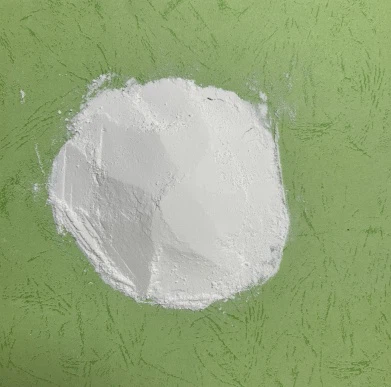 Polycarboxylate Superplasticizer EtherPolycarboxylate Superplasticizer Ether is a new generation of Eco-friendly high performance polycarboxylate ether superplasticizer powder developed by our company with EPEG 912 with M.W.: 3000 asAdd to Inquiry
 -
 Polycarboxylate Superplasticizer Flakepolycarboxylate superplasticizer flake is a new product produced by our company,With a good dispersion, an excellent adaptability to different cementsAdd to Inquiry
 -
High Water Reducer Polycarboxylic AcidHigh water reducer polycarboxylic acid is specially used for cement based self-leveling floor screeds and cement based dry mix mortar.Add to Inquiry
-
PCE Powder Water ReducerPCE Powder Water Reducer is a powdered concrete admixture with polycarboxylic acid polymer compounds as the main component. It belongs to the third generation of high-performance water reducers.Add to Inquiry
-
 SuperplasticizersSuperplasticizers, also known as high range water reducers, are chemical admixtures used where well-dispersed particle suspension is required.1.Low dosage2.High dispersion, fluidity andAdd to Inquiry
 -
 Polycarboxylate Ether SuperplasticizerNew generation polycarboxylate ether superplasticizer with high water reducing and well adaptability.Appearance (23℃):Colorless or light yellow to brown viscous liquidPH Value (23℃): 6±1Solid contentAdd to Inquiry
 -
 Slump Retention Admixture PCE PowderSlump Retention Type Admixture PCE Powder is a new generation of environmental friendly water reducer for mortar based on new synthesis technology.Density:500±50Kg/m³PH:6.0±1.0SolidAdd to Inquiry
 -
 High Performance Powder DefoamerHigh Performance Powder Defoamer is a highly effective powder defoamer designed to eliminate air entrapment in cementitious based products for the construction industry.Add to Inquiry


- Mobile:+86 15589354098
- Tel:+86 533 3146528
- Email:sales@zhuoxingchem.com
- Email:sales02@zhuoxingchem.com
- Email:sales03@zhuoxingchem.com
- Add: Block B, Yunlong International, Zhangdian District, Zibo City, Shandong Province, China.
Features of Concrete Admixture
Improved Workability
Admixtures enhance the workability of building materials, making them easier to place and finish. It improves the quality and appearance of the finished product.
Increased Strength And Durability
Admixtures increase the strength and durability of building materials, making them more resistant to wear and tear. It increases the lifespan of the building and reduces maintenance costs.
Reduced Permeability
Admixtures reduce the permeability of building materials, making them more resistant to water and chemicals. It reduces the risk of damage from water infiltration and chemical attack.
Improved Resistance To Freeze-Thaw Cycles
Admixtures enhance the resistance of building materials to freeze-thaw cycles, reducing the risk of damage from expansion and contraction due to temperature changes.
Reduced Shrinkage Cracking
Admixtures reduce the risk of shrinkage cracking in building materials, which can be caused by moisture loss during the curing process.
Enhanced Aesthetics
Admixtures can improve the appearance of building materials, making them more attractive and enhancing the overall design of the building.
Accelerating Admixtures
This type of admixture expedites the setting time of concrete for faster strength development. They increase the hydration rate of hydraulic cement when added to mortar or grout. They are composed of compounds like calcium chloride, calcium nitrate, or triethanolamine. They are utilised in situations where faster setting times are required, such as in cold weather conditions or for rapid construction schedules.
Retarding Admixtures
Retarders work oppositely to accelerators. They slow down the setting time of concrete. These are helpful when the concrete needs to travel long distances in special mixers or when it is hot outside. Retarding admixtures are especially handy as a grouting mix and work to reduce the water used. The hydroxyl carboxylic acid is a type of admixture that makes concrete with a bit less water than the quantity of water used in a regular mix. Using these admixtures can make the concrete last longer and be sturdier.
Water-Reducing Admixtures
These are the types of admixtures that enable the reduction of water content in the concrete mix without compromising its workability. They enhance the flowability of concrete, allowing for easier placement and better compaction. Using this admixture comes in handy in various scenarios. Pouring concrete is tricky because there are lots of bars or other elements in the way. Also, when the mix of concrete is tough, like when crushed rocks are used, this admixture can make the concrete more workable. Additionally, by adding this admixture, the cost of cement used in making concrete can be reduced by a notable amount. Common water-reducers include polycarboxylate ethers and lignosulfonates.
Air-Entraining Admixtures
These admixtures introduce microscopic air bubbles into the concrete mixture during mixing. By altering the surface tension of the mixing water, they allow air bubbles to form and disperse uniformly throughout the concrete. These bubbles enhance the concrete's durability by improving its resistance to freeze-thaw cycles, reducing bleeding, and improving workability. These are composed of agents like vinyl resin or salts of petroleum acids.
Super Plasticising Admixtures
Superplasticisers are advanced water-reducing agents that greatly enhance the workability of concrete without increasing water content. They significantly improve the flow characteristics of concrete, allowing for easier placement in congested reinforcement areas. Compounds such as sulfonated naphthalene formaldehyde condensate (SNF), polycarboxylate ethers (PCE), and melamine-based superplasticisers fall into this category.
Corrosion-Inhibiting Admixtures
Corrosion-inhibiting admixtures fall into the specialty admixture category and are used to slow corrosion of reinforcing steel in concrete. Corrosion inhibitors can be used as a defensive strategy for concrete structures, such as marine facilities, highway bridges, and parking garages, that will be exposed to high concentrations of chloride. Other specialty admixtures include shrinkage-reducing admixtures and alkali-silica reactivity inhibitors. The shrinkage reducers are used to control drying shrinkage and minimize cracking, while ASR inhibitors control durability problems associated with alkali-silica reactivity.
For Specialised Jobs Requiring Early Strength and Workability
Admixtures are used in specialised jobs like pre-stressed concrete bridges and precast concrete elements like beams, columns, floors, walls, etc. These jobs require high early strength and workability retention at high temperatures. When the concrete earns early strength, it releases from the precast mould which can help speed up production.
To Increase Workability without Affecting Compressive Strength
You can use admixtures to increase the workability of concrete without reducing its compressive strength or increasing the water-cement ratio. This can be beneficial when it comes to restricted concrete pores caused by congested reinforcement or complicated formwork.
In Ready-Mix Concrete with Retarding Action and High Workability
Admixtures can be used in ready-mix concrete where retarding action with high workability is necessary. This can be beneficial when concrete needs to be transported across long distances before it is placed.
For Reducing Permeability in Specific Concrete Uses
Concrete used in hydraulic structures, damp-proof courses, swimming pools, retaining walls, kitchen gardens, etc., needs reduced permeability. An admixture can impart permeability reduction properties to the concrete.
In High-Performance Concrete Projects
In construction projects where high-performance concrete is required, admixtures may be added to the mix to enhance the strength at a later stage and improve the final structure's resistance to chemical attacks.
Against Corrosion Attacks
Admixture is added to concrete that is exposed to corrosion attacks from severe exposure conditions.
For Bonding in Patching Work
Admixtures that enhance bonding properties can be used to bond new concrete to old concrete in patching work.
Ingredients
Concrete consists of a mix of cement, aggregates, and water. The specific formula is around 10-15% Portland cement, 15-20% water, and 65-75% aggregates. The aggregates in concrete may consist of gravel, stone, sand, or other materials.
Mixing for Application
The ideal cement mix ratio for most applications is 1:2:4, which refers to one part cement, two parts sand, and four parts coarse aggregates. This mixture works well across most applications, but the ratio may vary depending on the properties required of the concrete mixture. The ratio of cement, sand, and aggregates will change, for example, if you require added compressive strength, consistency, flowability, or other properties.
Slump
The slump of concrete refers to its consistency before it sets. The higher the slump, the more the fluidity of the concrete. You can test slump by seeing how much of a concrete mixture “slumps” while standing. The ratio of water to cement and/or the use of various concrete admixtures will affect the slump, which has a range of S1 to S5, with S1 being the driest and S5 being the wettest, the latter of which has a high water-to-cement ratio.
Select The Appropriate Additive According To The Characteristics Of The Project
The appropriate additives can be used in almost all kinds of concrete. Almost all kinds of concrete can be mixed with additives, but it is necessary to select the appropriate type of additives according to the different standard requirements, construction conditions and construction technology of concrete.
Quality Of Additives
At present, there are many brands of additives in China, for example, CSA cement additive. However, most manufacturers do not classify their product varieties, and the quality of products is different. Therefore, according to the quality standards, the additives and the performance of concrete should be tested before application.
Selection Of Cement
Among the additive materials, cement has the greatest influence on water-reducing admixture. Different types of cement will affect the water reducing and strengthening effects of water-reducing additives, especially the effect on water reducing. Water-reducing additives are more selective to cement, and the water reducing rate of different cement varies greatly. The mineral composition of cement, setting agent, alkali content and fineness will affect the effect of the water reducer. Therefore, the same water reducer often has different effects due to different cements under the same dosage. The same water reducer can achieve the same phase in different cements with the same water reducing and strengthen.
Dosage
Each kind of additive has a suitable dosage. Even if it is the same additive, it has different appropriate dosages according to different uses. If the dosage is too large, it may cause not only a waste in economy but also a quality accident. If the dosage of a water-reducing additive is too small, it will lose its high-efficiency function; if it is too large, it will affect the quality of concrete due to bleeding.
Adjust The Mix Proportion Of Concrete
Generally speaking, additives have no special requirements for concrete mix proportion and can be designed according to common methods. However, in the case of water reduction or cement saving, the sand ratio, cement dosage and water cement ratio should be adjusted appropriately.
Factors Affecting the Performance of Admixtures in Concrete
The Type Of Admixture
The many different types of admixtures are designed to perform specific functions, such as improving workability, setting time, strength or the durability of the concrete. The type chosen affects how well the admixture will perform in concrete since each type comprises different chemical and physical properties.
01
Dosage
Since admixtures alter the properties of concrete, adding an excess or even an insufficient amount to the concrete can greatly affect its functionality. Most commonly, problems with segregation and bleeding can be caused when the dosage of the admixture is not at the optimum level.
02
Cement Type And Compatibility
Every type of cement will yield different results with different admixtures. The performance of the concrete is thus also determined by the compatibility between an admixture and cement. Any incompatibility between the two will have an impact on the concrete's workability, segregation, durability and setting time.
03
Ambient Temperature
The performance of the admixture also depends on the temperature of the surrounding environment. Any increase in the surrounding temperature would increase saturation dosage and impact the effectiveness of the concrete.
04
The Mix
The different constituents of admixtures affect its final performance. The addition of water, coarse aggregates, fine aggregates, cement, influence the performance, physical interaction and dispersion and efficiency of admixtures.
05
The Type Of Admixture
The many different types of admixtures are designed to perform specific functions, such as improving workability, setting time, strength or the durability of the concrete. The type chosen affects how well the admixture will perform in concrete since each type comprises of different chemical and physical properties.
Dosage
Since admixtures alter the properties of concrete, adding an excess or even an insufficient amount to the concrete can greatly affect its functionality. Most commonly, problems with segregation and bleeding can be caused when the dosage of the admixture is not at the optimum level.
Cement Type And Compatibility
Every type of cement will yield different results with different admixtures. The performance of the concrete is thus also determined by the compatibility between an admixture and cement. Any incompatibility between the two will have an impact on the concrete's workability, segregation, durability and setting time.
Ambient Temperature
The performance of the admixture also depends on the temperature of the surrounding environment. Any increase in the surrounding temperature would increase saturation dosage and impact the effectiveness of the concrete.
The Mix
The different constituents of admixtures affect their final performance. The addition of water, coarse aggregates, fine aggregates, cement, influence the performance, physical interaction and dispersion and efficiency of admixtures.
Our Certificate


Our Factory

Frequently Asked Questions
As one of the most professional concrete admixture manufacturers and suppliers in China, we're featured by quality products and good price. Please rest assured to buy concrete admixture made in China here from our factory.
concrete admixture for concrete waterproofing project, liquid concrete admixture, concrete admixture for concrete freeze thaw resistance