

Polycarboxylate Superplasticizer Powder
Custom Polycarboxylate Superplasticizer Powder Manufacturer
Zibo Zhuoxing Enterprises Co., Ltd was established in 2008 and has been exporting TPEG, HPEG, EPEG, 50% polycarboxylate water reducer liquid and polycarboxylate water reducer powder to many countries since 2015.
Strong Production Ability
The company currently has a full set of production lines from HPEG to PCE high-efficiency water reducers. The annual production capacity is 80,000 tons and the output is 72,000 tons. The total annual PCE production capacity is 100,000.00 tons.
Quality Control
The company has passed ISO9001 quality management system certification. We conduct raw material inspection upon entry to ensure qualification for production, effectively control the whole production process to meet requirements, and sample test each batch before delivery.
Professional Team
The company is privileged to have a professional export team. Our R & D team, which consists of a group of highly qualified and experienced experts, maintains close and fruitful communication with renowned scientific research institutes consistently.
Rich Experience
As one of the two earliest manufacturers of TPEG/HPEG in China, after 16 years of continuous research, we have solved many professional needs of domestic and foreign customers in the field of PCE high-efficiency water reducers.
Polycarboxylate superplasticizer powder is an innovative and advanced construction material additive designed to optimize the performance of concrete and mortar mixes. It is a fine, free-flowing powder that is highly soluble in water, making it easy to handle and disperse in construction applications. This superplasticizer is specifically formulated with polycarboxylate-based polymers, which offer exceptional benefits to enhance the properties of concrete and mortar.
-
 Sps-20P Viscosity Reducing & Slump-Retaining High-Perform...SPS-20P is a new-generation, environmentally friendly, high-performance PCE powder characterized with viscosity reducing & slump-retaining and full water solubility.Used for Concrete Admixture, FloorAdd to Inquiry
 -
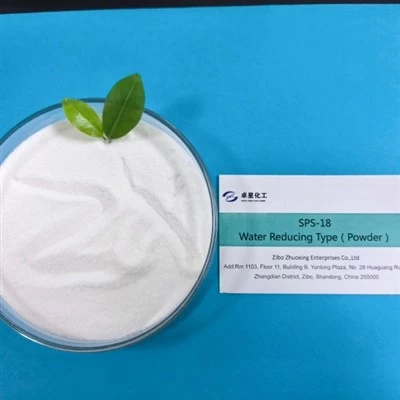 SPS-18 PCE Powder Water Reducing Type Polycarboxylate Sup...SPS-18 is high performance free–flowing, spray dried powder of polycarboxylic ether developed by our company with EPEG 912 (MW: 3000) as main raw material.Add to Inquiry
 -
 Precast Concrete ProductsThese Precast concrete products walls are used by many businesses because they are an excellent solution for blocking unwanted noise. You might also see them used alongside busy highways. The PrecastAdd to Inquiry
 -
 Water Reducing PlasticizerWater reducing plasticizer mainly refer to polycarboxylic acid water-reducing agents, and polycarboxylic acid water-reducing agents are divided into polycarboxylic acid ordinary water-reducing agentsAdd to Inquiry
 -
 Concrete Additives For StrengthFresh concrete’s workability significantly impacts placement and finishing. Additives such as plasticisers or superplasticisers improve workability, allowing for easier flow and better compaction.Add to Inquiry
 -
 Water Reducing AgentWhen using water reducing agents, you must pay attention to the treatment of pollution and waste, and dispose of them in strict accordance with environmental protection regulations. Simply achieveAdd to Inquiry
 -
 Superplasticizers For ConcreteWhen choosing any concrete admixture, including superplasticizers for concrete, the first step is to consider what the finishing project is going to need. This is especially true about the strengthAdd to Inquiry
 -
 Pce Powder For Concrete AdmixtureDue to the use of pce in concrete, the water-to-cement ratio of the concrete is greatly reduced, which provides good conditions for adding a large number of various mineral admixtures in the concrete.Add to Inquiry
 -
 Construction Building Pce PowderThe poly carboxylic ether superplasticizers are compatible with a wide range of cement types, including ordinary portland cement, blended cement, and even specialty cements. This versatility makesAdd to Inquiry
 -
 Superplasticizer Pce With Best qualitySuperplasticizer pce with best quality is specially used for gypsum based and cement based dry mix mortar.Appearance:White powderDensity(23℃):500±50PH (23℃):6.0±1.0Solid Content:97.0±1.0MoistureAdd to Inquiry
 -
 Superplasticizer Form China Professional technicalConcrete additive superplasticizer form China professional technical having a good thermostability.Appearance:White powderDensity(23℃):500±50PH (23℃) / 6.0±1.0SolidAdd to Inquiry
 -
 HPEG 2400HPEG is a kind of main raw material (polycarboxylate ether monomer) for producing high performance water reducing type polycarboxylate superplasticizer , it is produced with methallyl alcohol andAdd to Inquiry


- Mobile:+86 15589354098
- Tel:+86 533 3146528
- Email:sales@zhuoxingchem.com
- Email:sales02@zhuoxingchem.com
- Email:sales03@zhuoxingchem.com
- Add: Block B, Yunlong International, Zhangdian District, Zibo City, Shandong Province, China.
High Water Reduction
PCS allows for a significant reduction in the water-to-cement ratio in concrete mixes. This results in improved strength, durability, and reduced permeability without sacrificing workability.
Enhanced Workability
One of the primary benefits of PCS is its ability to enhance the workability of concrete. It provides better flow and increased slump retention, making the concrete easier to handle, place, and finish. This is particularly valuable in applications like ready-mix concrete and self-compacting concrete.
Improved Strength Development
By reducing the water content in the concrete mix, PCS contributes to the development of higher compressive and flexural strengths. This is essential for applications where increased strength is a primary requirement, such as in high-strength and high-performance concrete.
Better Cohesion and Segregation Resistance
Polycarboxylate superplasticizers improve the cohesion of concrete mixes, preventing segregation and ensuring a more uniform distribution of aggregates. This results in a more homogenous and well-compacted structure.
Compatibility with Various types of cement
PCS is known for its compatibility with a wide range of cement types, including ordinary Portland cement, blended cementscement, and other specialty formulations. This versatility makes it suitable for different construction applications.
Reduced Permeability
The use of PCS can lead to reduced permeability in concrete, providing better protection against water ingress, chemical attack, and environmental factors. This is particularly beneficial in structures where durability is a critical consideration.
Enhanced Setting Time Control
Polycarboxylate superplasticizers offer improved control over the setting time of concrete. This allows for flexibility in construction schedules and facilitates better coordination in projects where precise timing is crucial.
Environmentally Friendly
The reduced water content achieved with PCS contributes to a more sustainable and environmentally friendly construction process. It helps minimize the environmental impact associated with excessive water use and promotes the use of efficient concrete mixes.
Long-Term Durability
The improved strength, reduced permeability, and better overall performance of concrete mixes with PCS contribute to long-term durability. This is especially important in structures where longevity and resistance to deterioration are critical factors.
Versatility in Applications
PCS is suitable for various concrete applications, including pre-cast concrete production, ready-mix concrete, self-compacting concrete, and other specialized constructions. Its versatility makes it a valuable admixture for a wide range of projects.
Types of Water Reducers
Superplasticizers
High-range water reducers that comply with ASTM standards. They provide consistency across air entrainment and cement chemistries. They can also produce high slump at low dosages.
01
Mid-Range Water Reducers
These concrete admixtures provide superior placeability and finishing for flatwork in commercial and high-end residential construction.
02
Water Reducers
This set of water reducers provides superior water reduction, compressive strength, and set time control. They work synergistically with other polycarbonate-based mid- and high-range water reducers.
03
Organic Water Reducers
Organic water reducers are made with modified lignosulfonates containing a catalyst which promotes more complete hydration of Portland cement.
04
Clay Mitigators
These mid-range water-reducing admixtures mitigate the deleterious effects of swellable clays, permitting the use of polycarboxylate-based admixtures while maintaining the many benefits that polycarboxylate-based admixtures bring to concrete.
05

Precast and Cast-In-Place Concrete in Various Fields.
Suitable for precast and cast-in-place concrete, reinforced concrete, and prestressed concrete for high-speed railways, passenger dedicated lines, industrial and civil buildings, roads, bridges, ports, airports, etc. It is especially suitable for projects that require a long construction time for preparing concrete and high requirements for maintaining concrete slumps, such as nuclear power projects.
White Water-Soluble Powder with Excellent Dispersing Ability.
PCE chemical is a high-performance polycarboxylate superplasticizer powder specially used in high-aluminum and sulphur-aluminum cement systems. It is a white water-soluble powder. It has very excellent dispersing ability. SNF powder can significantly improve the fluidity of cement-based materials, endow the material with excellent workability and high mechanical strength. It also has a very fast plasticizing speed. After mixing it with water, it can quickly play a role, significantly improve construction efficiency, and meet different construction requirements.
Can be Compounded with Various Admixtures
Polycarboxylate-based superplasticizer can be compounded with various admixtures to form a multifunctional admixture, such as pumping agent, early strength agent, impermeable waterproofing agent, retarder, etc.
Widely Used in Dry Mortar and Concrete
Polycarboxylate superplasticizer powder has excellent adaptability, especially suitable for sulphur-aluminum, high-aluminum and gypsum systems. It can be widely used in various products systems such as dry mortar and concrete. It is especially suitable for the preparation of various high-end value-type mortar products and concrete products, such as surface self-leveling mortar, bearing mortar, etc.
Precautions of Polycarboxylate
Dosage
The common dosage is 0.1-0.5% of the cement materials. The most suitable dosage should be based on the conditions of project materials, ambient temperature, the requirements of construction, etc., and tested on-site.
Mixing
The product should be poured into a cement mixer concurrently with cement, sand, gravel and other project materials. Do not dissolve it in water beforehand or add it to wet sand or gravel directly. The mixing time should be based on the homogeneity of the mixture.
Compounding
The product can be compounded with retarders, accelerators, and other admixtures, but can’t be with naphthalene, amino sulfonate, or aliphatic high-range water reducers. A compatibility test should be performed before compounding with other functional admixtures.
Dosage Range and Adjustment
The recommended dosage range of polycarboxylic acid water reducing agent is 0.5%-1.6%, special cement or aggregate can adjust the dosage range appropriately.
Mixing Method and Time
It can be mixed with measured water and added into the concrete mixer at the same time with water. To achieve a good water-reducing effect, we recommend that the mixing time is at least 150s150.
Trial Mix Test Requirements
When using this product for the first time or changing the cement variety, the necessary trial mix test should be carried out according to the site raw materials and construction conditions, and the mixing quantity and construction ratio should be determined according to the test Ensure the results of concrete quality.
Importance of Controlling Water and Dosage
Because of the high water reduction rate of the PCE water-reducing agent, its concrete slump is very sensitive to water consumption, and the water consumption and dosage must be strictly controlled when using.
Incompatibility with Other Reducing Agents
The polycarboxylate powder should not be mixed with naphthalene, melamine, amino and other water-reducing agents, otherwise, the performance index will be significantly reduced.
Use Environment
The dosage of powdered polycarboxylic acid water reducer will be affected by the use environment. In high temperature seasons, because the evaporation rate of concrete is fast, in order to ensure the working performance of concrete, the dosage of water reducer needs to be appropriately increased. In low temperature seasons, in order to prevent early solidification of concrete, the dosage of water reducer needs to be appropriately reduced.
Concrete Mix Ratio
The dosage of powdered polycarboxylic acid water reducer is closely related to the mix ratio of concrete. Generally speaking, the thicker the mix ratio, the greater the dosage. However, if the dosage is too large, it will affect the working performance of concrete, such as reducing the durability and frost resistance of concrete.
Water-Cement Ratio
The water-cement ratio also has a certain influence on the dosage of powdered polycarboxylic acid water reducer. Generally speaking, the lower the water-cement ratio, the greater the dosage. However, if the dosage is too large, it will affect the strength and durability of concrete.
Our Certificate


Our Factory

Frequently Asked Questions
As one of the most professional polycarboxylate superplasticizer powder manufacturers and suppliers in China, we're featured by quality products and good price. Please rest assured to buy polycarboxylate superplasticizer powder made in China here from our factory.
polycarboxylate superplasticizer powder for shotcrete, polycarboxylate superplasticizer powder for durability, polycarboxylate superplasticizer powder for adaptation