

Polycarboxylate Superplasticizer
Polycarboxylate Superplasticizer Manufacturer
Zibo Zhuoxing Enterprises Co., Ltd was established in 2008 and has been exporting TPEG, HPEG, EPEG, 50% liquid Polycarboxylate water reducer,Polycarboxylate water reducer Powder and Flake to many countries since 2015.
Strong Production Ability
The company currently has a full set of production lines from HPEG to PCE high-efficiency water reducers. The annual production capacity is 80,000 tons and the output is 72,000 tons. The total annual PCE production capacity is 100,000.00 tons.
Quality Control
The company has passed ISO9001 quality management system certification. We conduct raw material inspection upon entry to ensure qualification for production, effectively control the whole production process to meet requirements, and sample test each batch before delivery.
Professional Team
The company is privileged to have a professional export team. Our R & D team, which consists of a group of highly qualified and experienced experts, maintains close and fruitful communication with renowned scientific research institutes consistently.
Rich Experience
As one of the two earliest manufacturers of TPEG/HPEG in China, after 18 years of continuous research, we have solved many professional needs of domestic and foreign customers in the field of PCE high-efficiency water reducers.
Polycarboxylate superplasticizer is a high-performance water-reducing agent. It is a cement dispersant used in cement concrete applications. Polycarboxylate Concrete superplasticizer is widely used in roads, bridges, dams, tunnels, high-rise buildings and, other projects.water-reducing.
-
 SPS-45 Slump-Retaining High-Performance PCE FlakeSPS-45 Long-Acting Slow-Release & Slump-Retaining High-Performance PCE Flake.SPS-45 is a new-generation, environmentally friendly, high-performance PCE flake characterized by long-acting slow-releaseAdd to Inquiry
 -
 SPS-28 Water Reducing Polycarboxylate Superplasticizer FlakeSPS-28 Next-Generation High-Performance PCE Flake for Superior Concrete PerformanceAdd to Inquiry
 -
 SPS-28 Polycarboxylate Superplasticizer Flake Water Reduc...SPS-28 Polycarboxylate Superplasticizer Flake is a new-generation, environmentally friendly, high-performance PCE powder characterized by high water-reducing and full water solubility.Add to Inquiry
 -
 SPS-28 Water Reducing Type Polycarboxylate Superplasticiz...SPS-28 is a new-generation eco-friendly polycarboxylate water-reducing tablet superplasticizer formulated mainly with EPEG-3000 monomers. With a solid content above 97%, the tablet dissolves rapidlyAdd to Inquiry
 -
 Sps-20P Viscosity Reducing & Slump-Retaining High-Perform...SPS-20P is a new-generation, environmentally friendly, high-performance PCE powder characterized with viscosity reducing & slump-retaining and full water solubility.Used for Concrete Admixture, FloorAdd to Inquiry
 -
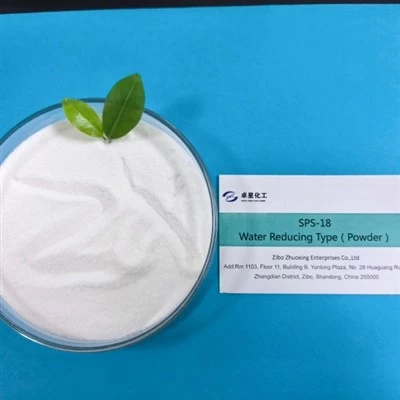 SPS-18 PCE Powder Water Reducing Type Polycarboxylate Sup...SPS-18 is high performance free–flowing, spray dried powder of polycarboxylic ether developed by our company with EPEG 912 (MW: 3000) as main raw material.Add to Inquiry
 -
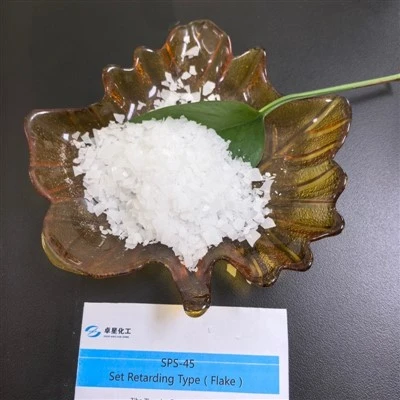 SPS-45 Set Retarding (long Slump Retention) Type Polycarb...SPS-45 is a Long-Acting Slow-Release & Slump-Retaining High-Performance PCE Flake.Add to Inquiry
 -
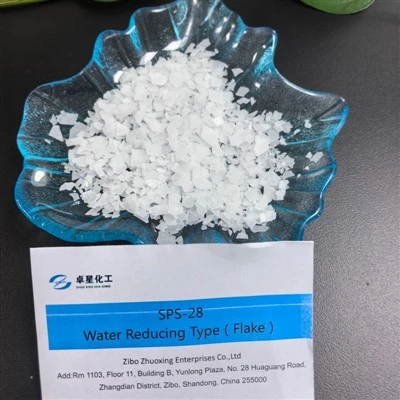 SPS-28 PCE Flake China Direct Factory Concrete Admixture ...SPS-28 is a new-generation, environmentally friendly, high-performance PCE powder characterized by high water-reducing and full water solubility.Add to Inquiry
 -
 Precast Concrete ProductsThese Precast concrete products walls are used by many businesses because they are an excellent solution for blocking unwanted noise. You might also see them used alongside busy highways. The PrecastAdd to Inquiry
 -
 Water Reducing Polycarboxylate Superplasticizer 50%PCEs enhance the workability of concrete used in precast applications, allowing for easy molding of intricate shapes and detailed surface finishes. Precast elements like panels, beams, and columnsAdd to Inquiry
 -
 Water Reducing PlasticizerWater reducing plasticizer mainly refer to polycarboxylic acid water-reducing agents, and polycarboxylic acid water-reducing agents are divided into polycarboxylic acid ordinary water-reducing agentsAdd to Inquiry
 -
 Concrete Additives For StrengthFresh concrete’s workability significantly impacts placement and finishing. Additives such as plasticisers or superplasticisers improve workability, allowing for easier flow and better compaction.Add to Inquiry


- Mobile:+86 15589354098
- Tel:+86 533 3146528
- Email:sales@zhuoxingchem.com
- Email:sales02@zhuoxingchem.com
- Email:sales03@zhuoxingchem.com
- Add: Block B, Yunlong International, Zhangdian District, Zibo City, Shandong Province, China.
Improve The Mechanical Properties Of Concrete
Because it has a good water-reducing effect and increases the structural density of concrete, it can increase the compressive, flexural and tensile strength.
Excellent Plastic Retention Performance
Because the steric hindrance effect of the extended polymer side chain effectively hinders the secondary agglomeration between cement particles, so the polycarboxylate water reducer has high dispersion performance and can maintaining this performance for a long time realizes the excellent plastic retention performance of the concrete mixture.
Improve The Durability Of Concrete
Effectively improve the durability of concrete, reduce the alkali-aggregate reaction of concrete, and improve the freeze-thaw resistance of concrete.
Good Water Reducing Rate
Polycarboxylate water reducing agent has good water reducing performance at low dosage (generally 0.2%~0.3%, equivalent to the mass ratio of dry base to cement), especially in high-grade concrete (C50 Above) is more obvious, and its maximum water reduction rate can reach 40%;
Dimensional Stability
Concrete mixed with polycarboxylate superplasticizer can effectively improve its shrinkage and creep performance, have good dimensional stability, and reduce the risk of cracking.
Early Strength And Good Reinforcement Effect
Under the same conditions, the early strength and strengthening effect of concrete mixed with polycarboxylate superplasticizers are higher than other types of superplasticizers.
Excellent Water Retention Performance
The bleeding of concrete mixed with polycarboxylate superplasticizer is significantly lower than that of ordinary concrete, without segregation, and the construction work is easier to carry out.
Types of PCE
Standard PCE
This is the most commonly used type of PCE superplasticizer. It’s used in many applications, from high-strength concrete to self-compacting concrete.
Retarding PCE
This type of PCE superplasticizer is used to abridge the setting time of concrete. This is useful in hot weather conditions where the concrete might set too quickly.
Water-reducing PCE
This type of PCE superplasticizer reduces the water needed in a concrete mixture. This results in more robust, more durable concrete that is less prone to cracking and breaking.
Slump Retention PCE
This type of PCE is applicable to various ready mix concrete for industrial and civil architectures, especially to low grade commodity concrete.

Compatibility Technology Of Polycarboxylate Superplasticizer
Polycarboxylate superplasticizers have unique structures and cannot be stored and used together with other water reducers.
Retardation Technology Of Polycarboxylate Superplasticizer
By using retarders during construction, the workability of concrete can be effectively extended.
Control Of Air Content
Polycarboxylic acid-based water reducers have good air entraining effects and can be used with defoamers and air entraining agents. By controlling the air content through a sequence of defoaming and air entrainment, the workability and durability of concrete can be improved.
Control Of Sand And Aggregate Fines Content
The fines content in sand and aggregates also affects the application effectiveness of polycarboxylic acid-based superplasticizers. If a large amount of fines is present in the construction process, it is advisable to use a polycarboxylic acid water reducer with clay resistance properties.
How to Use Polycarboxylate Superplasticizer
Determining the Dosage
Determine the dosage of polycarboxylate superplasticizer needed for your specific concrete mix. This will depend on factors such as desired workability, slump retention requirements, and ambient conditions. Consult the manufacturer's guidelines or seek advice from experts if necessary.
Adding Water First
Next, add the required amount of water to the mixing container before introducing the dry ingredients. It is important to note that polycarboxylate superplasticizers are highly efficient and require less water compared to other plasticizers.
Incorporating Dry Ingredients
Once the water is added, slowly incorporate the cement and aggregates while continuously mixing. Make sure all materials are well-blended before adding the polycarboxylate superplasticizer.
Adding the Superplasticizer
When it comes time to add the superplasticizer, pour it slowly into the mixture while maintaining constant agitation. This ensures proper dispersion and avoids clumping or uneven distribution within the concrete matrix.
Ensuring Homogeneity
Remember to continue mixing for an appropriate duration until achieving homogeneity throughout your batch of concrete.
Placing and Finishing
Proceed with placing and finishing your freshly mixed concrete as usual. Pay close attention to its workability during placement and adjust accordingly if necessary by adding more water or adjusting mix proportions within acceptable limits.
Mother Liquor
The polycarboxylic acid mother liquor can increase the water-reducing rate by adjusting the ratio of acrylic acid to macromonomer, but the slump retention performance of the mother liquor will be sacrificed. Between improving the water reducingwater-reducing rate to highlight the cost performance and improving the slump performance to ensure the use effect, the performance of the water-reducing mother liquor on the market is the same.
Retarder
● Sodium Gluconate
It is cheap and can provide a certain water reduction rate. The most cost-effective, it is the most common retarder in compounding. The disadvantage is that there is a certain probability of reducing the workability of concrete.
● White Sugar
The price is slightly expensive, and the retarding effect is remarkable, which can improve the workability of concrete. The disadvantage is that the final setting time of concrete is increased at low temperaturetemperatures.
● Maltodextrin
The price is similar to that of sodium gluconate, which can improve the water retention of concrete. The disadvantage is that it may increase the loss of concrete slump.
Defoamer Air-Entraining Agent
A certain amount of air-entraining agent in concrete is very beneficial to improve the fluidity, workability and pumpability of concrete, reduce segregation and bleeding of the mixture, and improve the uniformity and durability of concrete. However, the amount of air-entraining agent should not be too high. Excessive air content will increase the compressibility of the air and produce an unsaturated state, which will increase the pump pressure loss during pumping. In the process of updating and iterating the polycarboxylate superplasticizer, the types of air-entraining agent and defoamer are even more complicated than the mother liquor. The defoamer is used to reduce the air content of concrete and eliminate large air bubbles that are not conducive to concrete. The dosage is generally about three ten thousandths.
Water Retaining Agent
When the workability of concrete cannot be completely improved by the above materials, water retainingwater-retaiagentsning agents such as cellulose ether, polyacrylamide, and Wenlun glue can be considered to improve the workability of concrete. In commercial concrete, the application of water retaining agent is seldom. Too much water retaining agent will affect the slump retention effect of concrete. Affecting the slump retention effect is a disguised increase in the compounding cost of the water reducer. The dosage of cellulose ether is less than 3/10,000.
Antifreeze Early Strength Agent
Various inorganic salts have antifreeze effect, commonly used antifreeze agents are sodium nitrite, sodium nitrate, calcium nitrate and so on. Sodium chloride has the lowest price, and chloride ions have the side effect of corroding steel bars. In order to reduce the compounding cost of polycarboxylate superplasticizer, some admixture manufacturers combine sodium nitrite and sodium chloride, which have antirust effects.
Disperse Cement Particles
After the cement is added to water, due to the molecular cohesion between cement particles and other factors, a flocculation structure will be formed. The water-reducing agent molecule is composed of a hydrophilic group and a hydrophobic group. When the water-reducing agent is added to the cement paste, the hydrophobic group points to the cement particles and adsorbs on the surface of the cement particles to form an adsorption film to make the cement particles With the same charge, under the action of electrostatic repulsion, the flocculation structure is disintegrated and becomes a smaller structure; its hydrophilic group points to the solution. When the cement particles are close to each other, the water-reducing agent molecules on the surface of the cement particles are hydrophilic Repulsive force (called steric hindrance repulsion) is also generated between the groups, which makes the structure more dispersed.
Lubricating Cement Particles
When the flocculation structure is destroyed, the encapsulated water is also released and participates in the flow, which enhances fluidity; in addition, because the hydrophilic groups of the water-reducing agent are very polar, the water-reducing agent adsorption film on the surface of the cement particles can interact with water molecules. A stable volume hydration film is formed, which can play a very good lubricating effect and further enhance the fluidity.

Polycarboxylate Water Reducer, Defoamer
The compounding effect of oil type, emulsifying type, dissolving type and solid defoamer, and, polycarboxylate water reducer was studied, and it was found that dissolving defoamer has good compatibility with polycarboxylate and can High-flow, high-slump, high-strength pumping agent; if the storage time is short, the emulsified type can also be used in compounding; while other kinds of defoamers are not suitable for compounding, and can only be used as a single blend.
Polycarboxylate Water Reducer, Defoamer, Air Entraining Agent
By studying the composite technology of defoamer, air-entraining agent, maximizing, and, polycarboxylate superplasticizer, the composite superplasticizer system that meets the requirements of fair-faced concrete is optimized. The key to compounding technology is the amount of defoamer and air-entraining agent. By optimizing the amount of defoamer and air-entraining agent, performance requirements such as improving workability, increasing strength, increasing compactness, and reducing foaming can be achieved.
Polycarboxylate Water Reducer, Defoamer, Air Entraining Agent, Retarder
Using the composite technology of polycarboxylate water reducer, defoamer, air-entraining agent and retarder, by adjusting the dosage of each component, the compound system can achieve the best effect of the composite system on concrete workability, slump retention, and, setting time. synergistic effect. The test found that when the amount of defoaming agent is controlled at 0.2% of the mass of polycarboxylate superplasticizer, foaming can be effectively eliminated and the strength can be improved.
Difference Between Plasticizer and Superplasticizer
Water Reduction
An high-efficiency water-reducing agent has obvious effect on improving the use efficiency of cement, which can save about 20% of cement consumption, greatly improving the compactness and hardness of cement-based materials, and increasing its fluidity.
Workability
High-efficiency water-reducing agents can delay the setting and hardening time of concrete, which is convenient for construction, can slow down the hydration speed of concrete slurry, prolong the hydration heat release process, and is beneficial to the temperature control of large-volume concrete.
Fluidity
The superplasticizer contains a surface-active substance, which is one of the commonly used admixtures for concrete. It can enable the concrete to introduce a large number of evenly closed small bubbles from the atmosphere during the mixing process, so that the concrete contains a certain amount of air. It can improve the bleeding and segregation of concrete, reduce the permeability of concrete, and improve the anti-erosion ability of concrete.
Performance Criteria
The first factor in choosing the right superplasticizer is to evaluate the superplasticizer's impact on concrete properties such as workability, setting time, and final strength. Different projects usually require specific properties. For instance, high-rise buildings need high-strength and fast-setting concrete. In contrast, intricate structures may need superior fluidity in concrete. Compatibility with various types of cement and other admixtures should also be considered to avoid problems in construction projects.
Dosage And Mixing
The second major factor to consider before buying superplasticizer is proper dosage which is necessary for achieving the desired properties in concrete. However, on-site adjustments may be necessary depending on environmental conditions and the composition of concrete. Generally, superplasticizers should be able to mix evenly to ensure uniform distribution within the concrete mix. This helps to avoid segregation and ensures consistent performance.
Testing And Evaluation
Conducting comprehensive laboratory and field tests is necessary to determine the effectiveness of superplasticizers. Some of the common tests to evaluate their performance include flow table tests, slump tests, and compressive strength tests. In addition, long-term evaluations, such as durability tests also help to ensure that the superplasticizer meets the project's specific requirements.
Economic Considerations
Cost-effectiveness is another key factor to consider when you buy superplasticizers. Usually, high-performance superplasticizers tend to have a higher initial cost. However, their ability to reduce water content and improve concrete properties can help to save in other areas, such as lesser cement quantity and shortened construction duration.
Environmental and Health Considerations
Always choose superplasticizers with low impact on the environment and minimal health risks. Environment-friendly superplasticizers with reduced carbon footprints and non-toxic components are widely available.
Factors to Consider When Choosing
Consider the Requirements of the Project
When choosing any concrete admixture, including superplasticizers, the first step is to consider what the finishing project is going to need. This is especially true about the strength of the concrete. If you’re working on a high-strength concrete project, you are going to need an extra powerful superplasticizer. These products offer up to 40% water reduction.
Consider the Elements
In general, using a superplasticizer in your concrete during cooler weather can help reduce the risk of concrete freezing, but you need to be sure you are using a product that does not contain a set retarder, which would be more suited for warmer temperatures. Warm temperatures often decrease the slump of concrete.
Consider the Chemistry
In recent years, it has become common to use polycarboxylate as a base for superplasticizers. Even with a very low dosage, the chemical structure provides a 40% water reduction and increased strength. This makes polycarboxylate plasticizers more economical.
Our Certificate


Our Factory

Frequently Asked Questions
As one of the most professional polycarboxylate superplasticizer manufacturers and suppliers in China, we're featured by quality products and good price. Please rest assured to buy polycarboxylate superplasticizer made in China here from our factory.
Water Reducing Additive For Concrete Products, Polycarboxylate Powder, Additive admixture For Cement Concrete