


Zibo Zhuoxing Enterprises Co., Ltd was founded in 2008. Zibo Zhuoxing Enterprises Co., Ltd is the international trade company of Shandong Zhuoxing Chemical, has begun to export TPEG, HPEG, EPEG,Polycarboxylate superplasticizer liquid with 50% content and Polycarboxylate superplasticizer powder to many countries since 2015.
Why Choose Us
Strong Production Ability
The company currently has a full set of production lines from HPEG to PCE high-efficiency water reducers. The annual production capacity is 80,000 tons and the output is 72,000 tons. The total annual PCE production capacity is 100,000.00 tons.
Quality Control
The company has passed ISO9001 quality management system certification. We conduct raw material inspection upon entry to ensure qualification for production, effectively control the wh.
Professional Team
The company is privileged to have a professional export team. Our R & D team, which consists of a group of highly qualified and experienced experts, maintains close and fruitful communication with renowned scientific research institutes consistently.
Rich Experience
As one of the two earliest manufacturers of TPEG/HPEG in China, after 16 years of continuous research, we have solved many professional needs of domestic and foreign customers in the field of PCE high-efficiency water reducers.

Slump Retention Polycarboxylate Superplasticizer 50%
Slump Retention Type Polycarboxylate Superplasticizer 50% is a new generation Eco-friendly high performance polycarboxylate superplasticizer Appearance:White or light yellow to brown viscous liquid Density:1.10±0.02 PH:5-7 Solid Content: 50±1.0 Water Reducing Ratio:≥15

Set Retarding Polycarboxylate Superplasticizer 50%
Set Retarding Polycarboxylate Superplasticizer 50% is a new generation of liquid plastizing admixture acts as a retarder on setting time for freshe concrete.
1. Increased setting time at elevated temperature
2. Good adaptability to cement.

Early Strength Polycarboxylate Superplasticizer 50%
Early Strength Type Polycarboxylate Superplasticizer 50% is based on the action between polycarboxylate superplasticizer molecule and cement
Appearance (23℃):Colorless, light yellow to brown viscous liquid
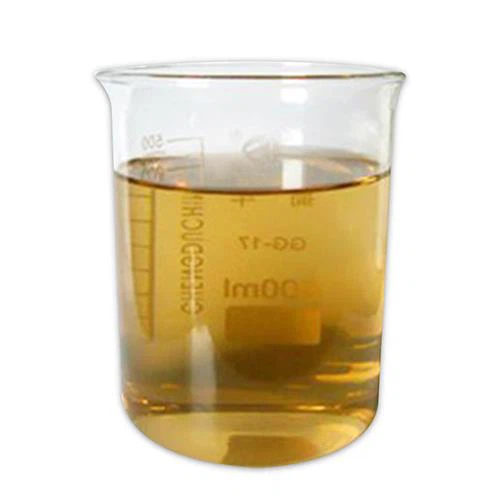
Water Reducing Polycarboxylate Superplasticizer 50%
Water Reducing Type Polycarboxylate Superplasticizer 50% is an Eco-friendly new generation high performance polycarboxylate ether superplasticizer Appearance:White or light yellow to brown viscous liquid Density:1.10±0.02 PH;5-7 Solid content:50±1.0 Water reducing ratio:≥25
Water Reducing Polycarboxylate Superplasticizer 50% has the characteristics of high water reducing rate, small slump loss, and environmental protection. It is a high-performance water reducing agent. and other fields are widely used.
Water Reducing Polycarboxylate Superplasticizer 50% has excellent performance and has been widely recognized by the market. However, as the third generation of water reducer, the molecular structure and principle of action of Water Reducing Polycarboxylate Superplasticizer 50% are quite different from those of the previous two generations.
Benefits of Water Reducing Polycarboxylate Superplasticizer 50%
Higher Water Reduction
Water Reducing Polycarboxylate Superplasticizer 50% can significantly reduce the water-to-cement ratio in concrete mixes, leading to increased strength and durability without compromising workability. This property is crucial for creating high-performance concrete.
Improved Workability
PCEs provide excellent workability and flowability to concrete mixes. This is especially important in applications where concrete needs to be easily poured and placed, such as in intricate molds or congested reinforcement areas. The improved workability allows for easier handling and shaping of the concrete.
Enhanced Strength and Durability
By reducing the water content while maintaining workability, PCEs contribute to the development of high-strength and durable concrete. This is vital for structures that need to withstand heavy loads, harsh weather conditions, or aggressive environments.
Better Retention of Slump
PCEs help maintain the slump (consistency) of the concrete mix over a more extended period compared to other types of superplasticizers. This is especially beneficial in large construction projects where concrete may need to be transported over long distances before placement.
Reduced Environmental Impact
The use of PCEs can contribute to more sustainable construction practices by allowing the production of high-performance concrete with lower cement content. This reduces the overall carbon footprint associated with cement production.
Polycarboxylate superplasticizer, also known as PCE, are a class of chemical admixtures commonly used in the construction industry. They are designed to improve the ease and flow of concrete while reducing the water content. This will improve the strength and durability of the concrete structure.
There are different types of polycarboxylate superplasticizer available in the market today. One common type is the traditional polycarboxylate high efficiency (PCE) water reducer. This type has excellent water reducing capacity and is suitable for a variety of applications such as high strength concrete or self-compacting concrete.
Another type is the modified polycarboxylate high efficiency water reducer, which contains additional modifiers to enhance specific properties such as early strength development or extended make-up time. This makes them ideal for applications that require fast set-up or extended working times.
The third type is a retarded coalescing carboxylic acid water reducer, which delays the setting time of concrete. It allows for a better surface finish and reduces cracking by extending the time before initial setting.
There are also special types of polycarboxylate superplasticizer with unique properties such as air entrapment or corrosion inhibition properties. These variants are available to meet specific construction needs and requirements.
Applications of Water Reducing Polycarboxylate Superplasticizer 50%
Water Reducing Polycarboxylate Superplasticizer 50% (PCEs) find widespread applications in the construction industry due to their ability to enhance the performance and workability of concrete and other cement-based materials.
Precast Concrete: PCEs enhance the workability of concrete used in precast applications, allowing for easy molding of intricate shapes and detailed surface finishes. Precast elements like panels, beams, and columns benefit from the improved flow and reduced water content provided by PCEs.
Ready-Mix Concrete: PCEs are widely used in ready-mix concrete plants to produce concrete mixes that can be transported to construction sites and poured directly. The improved workability and slump retention properties of PCEs are crucial for maintaining concrete quality during transit and placement.
Shotcrete: PCEs are employed in shotcrete applications (sprayed concrete) where high fluidity and good cohesion are required. Shotcrete is commonly used for repairing and retures, particularly in tunneling and slope stabilization projects.
Mass Concrete: PCEs help reduce the heat of hydration in large concrete pours, making them suitable for mass concrete applications like dams, foundations, and retaining walls. Controlling the heat of hydration is essential to prevent thermal cracking in massive concrete structures.
High-Performance Concrete: PCEs are a key ingredient in high-performance concrete formulations, which exhibit exceptional strength, durability, and resistance to environmental factors. These concrete mixes are often used in demanding applications like industrial floors, parking structures, and high-traffic pavements.
Water Reducing Polycarboxylate Superplasticizer 50% are a new type of water reducer with many outstanding advantages, but their mechanism of action is not fully understood yet.
● Retardation effect, mainly because the carboxyl groups act as retardation components. R-COO~ interacts with Ca2+ ions to form complexes, reducing the concentration of Ca2+ ions in the solution, delaying the formation of Ca(OH)2 crystals, reducing the formation of C-H-S gel, and delaying cement hydration.
● The polar groups with strong affinity to water, such as carboxyl (-COOH), hydroxyl (-OH), amino (-NH2), and polyalkylene (-O-R)n, mainly provide dispersion and fluidity to cement particles through adsorption, dispersion, wetting, and lubrication actions. They reduce the frictional resistance between cement particles, lower the free energy of the cement-water interface, and increase the workability of fresh concrete. Polycarboxylate substances adsorbed on the surface of cement particles impart negative charges to cement particles, causing electrostatic repulsion between cement particles and dispersing them, leading to inhibited aggregation of cement paste (DLVO theory), increasing the contact area between cement particles and water, and ensuring full hydration of cement. During the dispersion of cement particles, free water locked by aggregates is released, improving workability and reducing the amount of mixing water.
● Steric hindrance effect. Polycarboxylate molecules adsorbed on the surface of cement particles form a "comb-like" structure, creating an adsorption layer on the surface of gel materials. When polymer molecular adsorption layers approach and intersect, physical steric hindrance occurs between polymer chains, preventing cement particle aggregation. This is an important reason why carboxylic acid superplasticizers have stronger dispersing capabilities compared to other systems.
● The mechanism of maintaining dispersion of Water Reducing Polycarboxylate Superplasticizer 50% can be understood from the relationship between time after mixing cement paste and Zeta potential. Generally, concrete using naphthalene and melamine-based superplasticizers experiences significant slump loss after 60min compared to concrete containing Water Reducing Polycarboxylate Superplasticizer 50%. This is mainly due to different adsorption models between the latter and cement particles, where the force between polymer adsorption layers is steric electrostatic repulsion, resulting in minor changes in Zeta potential.
The effect of Water Reducing Polycarboxylate Superplasticizer 50% on the properties of gypsum
The water reducing agent can maintain good working performance while reducing the water-to-paste ratio. The reaction mechanism of superplasticizers is complex, often accompanied by synergistic effects of multiple mechanisms. The Water Reducing Polycarboxylate Superplasticizer 50% is adsorbed on the hydration product to make the particles negatively charged, while the same amount of positive charges are dispersed in the liquid dispersoid to form an electric double layer, and the electromotive force is greatly increased, resulting in the electrostatic repulsion between particles greater than Van der Waals force, and the Water Reducing Polycarboxylate Superplasticizer 50% has a unique comb-like structure, which can produce a greater isolation effect, so as to achieve the purpose of dispersing particles and enhancing the fluidity of the slurry.
Influence of acid-ether ratio
Increasing the acid-ether ratio within a certain range can increase the water reduction rate, increase the strength, and have little effect on the setting time. If the ratio of acid to ether is too large, due to the retarding effect of carboxylic acid, the setting time is prolonged and the water reduction rate is reduced.
Effect of side chain length
Too long or too short side chain length will reduce water reduction rate and strength; too short side chain length will greatly affect setting time, water reduction rate, and reduce bending resistance, but the impact on compressive strength is low.
Influence of chain transfer agent
When the amount of chain transfer agent is small, the molecular mass of the polymerization system is larger, the molecular segments are easily entangled together, and the dispersing ability is reduced. However, when the dosage is too large, the molecular weight of the polymerization system will become smaller, the steric hindrance will be weakened, and the fluidity of the gypsum slurry will become smaller.
Influence of functional groups
The hydration rate of gypsum is too fast, which will lead to a large loss of fluidity of gypsum. Generally, retarders are used to slow down the early hydration rate of gypsum and gypsum water reducers with larger steric hindrance are selected to reduce the flow of gypsum. However, adding too much retarder will reduce the strength of gypsum, so a polycarboxylate water reducer with ester group with larger steric hindrance should be selected. The synergistic effect of electrostatic repulsion and steric hindrance will increase the water reducing rate of gypsum water reducing agent and reduce the loss of gypsum flow.
Influence of functional groups
Mechanism: The plastic-preserving component of unsaturated phosphoric acid monoester is more fluid than methyl methacrylate, this is because the hemihydrate gypsum and dihydrate gypsum crystal nucleus in gypsum are insoluble by calcium phosphate salt Covering the surface, the dissolution of hemihydrate gypsum is inhibited.
In recent years, the synthesis technology of polycarboxylic acid mother liquor has become more and more mature through several update iterations, from the high-temperature esterification process that must use pure water to the tap water normal temperature method. Greatly lowered the synthesis threshold of Water Reducing Polycarboxylate Superplasticizer 50%. Most of the mother liquors on the market have similar properties, providing a relatively common communication basis for the compounding technology.
Mother Liquor
The most commonly used mother liquors are water-reducing mother liquor and slump-preserving mother liquor. Some people in the market are used to calling the slump-preserving mother liquor as the slump-preserving agent. There is a big difference between the slump-preserving mother liquor and the water-reducing mother liquor, but the synthesis method is the same only the synthetic raw materials are different. The slump-preserving mother liquor is more standardized in the division of compound raw materials.
The polycarboxylic acid mother liquor can increase the water reducing rate by adjusting the ratio of acrylic acid to macromonomer, but the slump retention performance of the mother liquor will be sacrificed. Between improving the water reducing rate to highlight the cost performance and improving the slump performance to ensure the use effect, the performance of the water reducing mother liquor on the market is basically the same.
Defoamer air-entraining agent
A certain amount of air-entraining agent in concrete is very beneficial to improve the fluidity, workability and pumpability of concrete, reduce segregation and bleeding of the mixture, and improve the uniformity and durability of concrete. However, the amount of air-entraining agent should not be too high. Excessive air content will increase the compressibility of the air and produce an unsaturated state, which will increase the pump pressure loss during pumping. In the process of updating and iterating the Water Reducing Polycarboxylate Superplasticizer 50%, the types of air-entraining agent and defoamer are even more complicated than the mother liquor. The defoamer is used to reduce the air content of concrete and eliminate large air bubbles that are not conducive to concrete. The dosage is generally about three ten thousandths.
Water retaining agent
When the workability of concrete cannot be completely improved by the above materials, water retaining agents such as cellulose ether, polyacrylamide, and Wenlun glue can be considered to improve the workability of concrete. In commercial concrete, the application of water retaining agent is seldom. Too much water retaining agent will affect the slump retention effect of concrete. Affecting the slump retention effect is a disguised increase in the compounding cost of the water reducer. The dosage of cellulose ether is less than 3/10,000.
Antifreeze early strength agent
Various inorganic salts have antifreeze effect, commonly used antifreeze agents are sodium nitrite, sodium nitrate, calcium nitrate and so on. Sodium chloride has the lowest price, and chloride ions have the side effect of corroding steel bars. In order to reduce the compounding cost of Water Reducing Polycarboxylate Superplasticizer 50%, some admixture manufacturers combine sodium nitrite and sodium chloride, which have antirust effects. Antifreeze also has early strength effect. In addition, triethanolamine can be used to improve the early strength of concrete.
Our factory
Our factory, Shandong Zhuoxing Chemical is one of the largest manufacturer of polyoxyethylene ether (polycarboxylate monomer)TPEG/HPEG/EPEG in China, with annual capacity 80,000 tons and output 72,000 tons. We also produce third genertion concrete admixture polycarboxylate superplasticizer in liquid form with solid content 50% and polycarboxylate superplasticizer powder with solid content of 97% min.

Our Certificates


FAQ
Hot Tags: water reducing polycarboxylate superplasticizer 50%, China water reducing polycarboxylate superplasticizer 50% manufacturers, suppliers, factory, SuperPlasticizers For Concrete Foundation, Powder PCE Admixture For Concrete superplasticizer, High Water Reducer Series Acid Water Reducer, Chemical Additive SuperPlasticizer, Polycarboxylate Superplasticizer Accelerator


